
Glastonbury Festival
The world's most famous festival does not actually happen in Glastonbury. Worthy Farm, its home since 1970, is at Pilton, a village a few miles east of the town and only a short drive from Hunter's Moon. For festival-goers who would rather sleep in a king-size bed and soak in a hot tub than a muddy tent, the cottage is about as close as luxury gets.
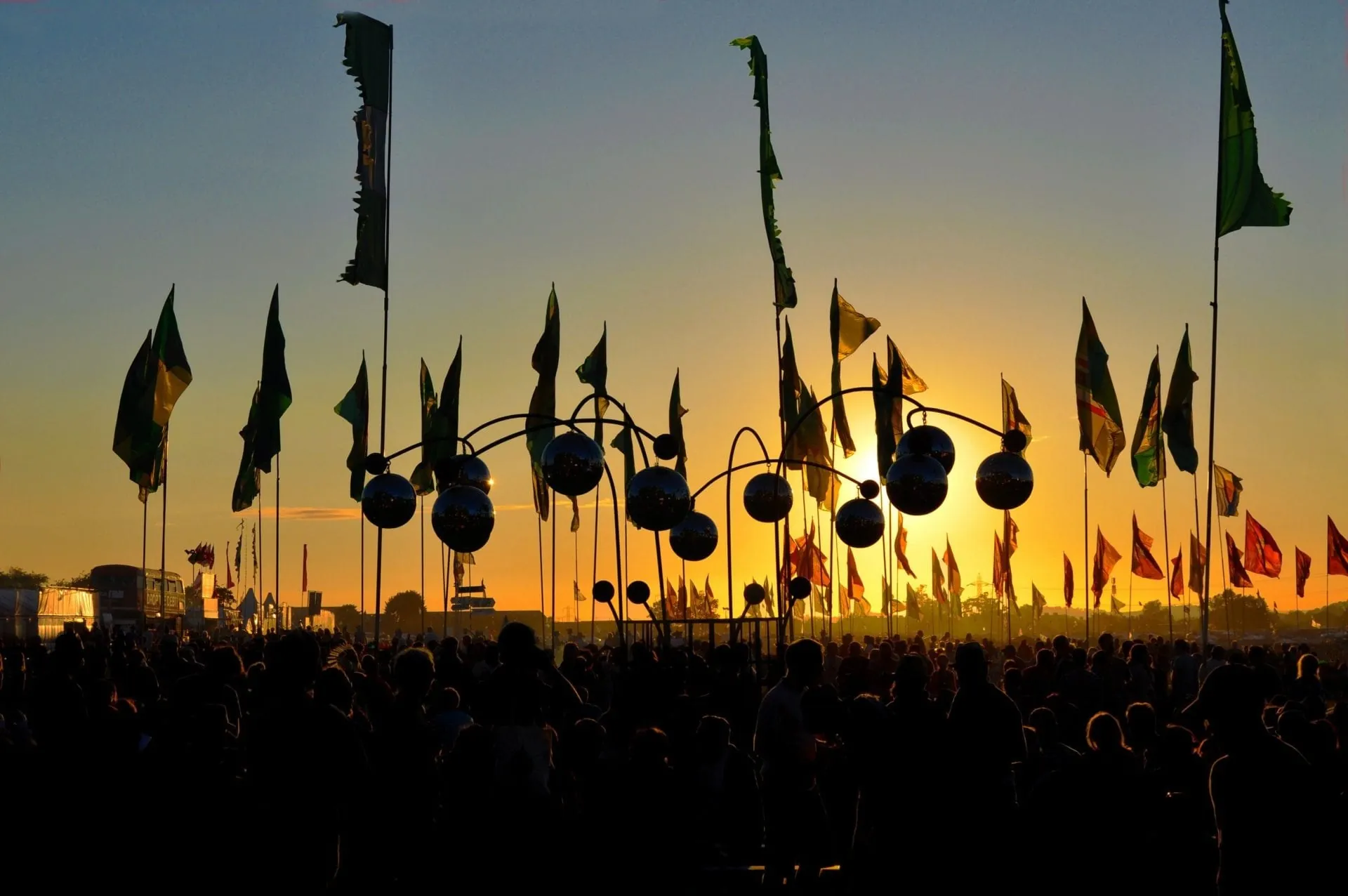
A little festival history
Michael Eavis held the first festival on his dairy farm in September 1970, the day after Jimi Hendrix died. Fifteen hundred people paid a pound each, which included free milk from the farm, to see Marc Bolan headline after The Kinks pulled out. The following year's free festival, funded by a small circle of idealists and held at the summer solstice, introduced the first Pyramid Stage, built from scaffolding and metal sheeting on a spot chosen for its position on the Glastonbury ley line.
From those beginnings the Glastonbury Festival of Contemporary Performing Arts has grown into a temporary city of more than 200,000 people, with over a hundred stages and areas spread across 900 acres, its own newspaper, and headline sets that become part of music history. It has kept its roots too: a large share of profits goes to Oxfam, WaterAid and Greenpeace, the farm's cows still graze the fields the rest of the year, and every fifth year or so is a fallow year to let the land recover.
Dates and tickets
The festival is normally held over the last weekend of June, from Wednesday to Sunday. Tickets go on sale in the autumn before the festival and sell out within an hour, so registration and a fast internet connection are essential. Details are at glastonburyfestivals.co.uk. Hunter's Moon is booked well in advance for festival week; contact us as soon as you know your plans.
Getting to the festival from Hunter's Moon
Worthy Farm is about four miles from the cottage by road. During the festival the lanes around Pilton are closed to non-festival traffic and there is no parking outside the official car parks, so the practical options are to take a pre-booked taxi to one of the pedestrian gates, to use the festival shuttle buses from Castle Cary station or the official car parks, or, for the fit, to cycle or walk along the lanes and footpaths (a bike lock and lights are essential). Ask us for the current arrangements; they change each year.
Festival week at the cottage
- A hot bath, a proper bed and a hot tub at the end of every night
- A washing machine and dryer for the mud
- Breakfast for ten before you set off, dinner when you get back
- Somewhere quiet to recover on the Monday
- The Pilton Inn and the Lion at Pennard for a pint away from the crowds
Other festivals and events
Glastonbury and Somerset have a full calendar beyond the big one. The Glastonbury Carnival in November is one of the largest illuminated processions in the world, part of the Somerset carnival circuit that also visits Wells and Shepton Mallet. The Glastonbury Frost Fayre fills the High Street in late November, the Goddess Conference and Beltane celebrations mark the spiritual year, and the summer and winter solstices draw crowds to the Tor at dawn. The Royal Bath & West Show, one of England's great agricultural shows, is held at Shepton Mallet in early June, and the showground hosts events all year.
Glamping is for amateurs
Check availability at Hunter's Moon for festival week and the rest of the summer.
Check availability